
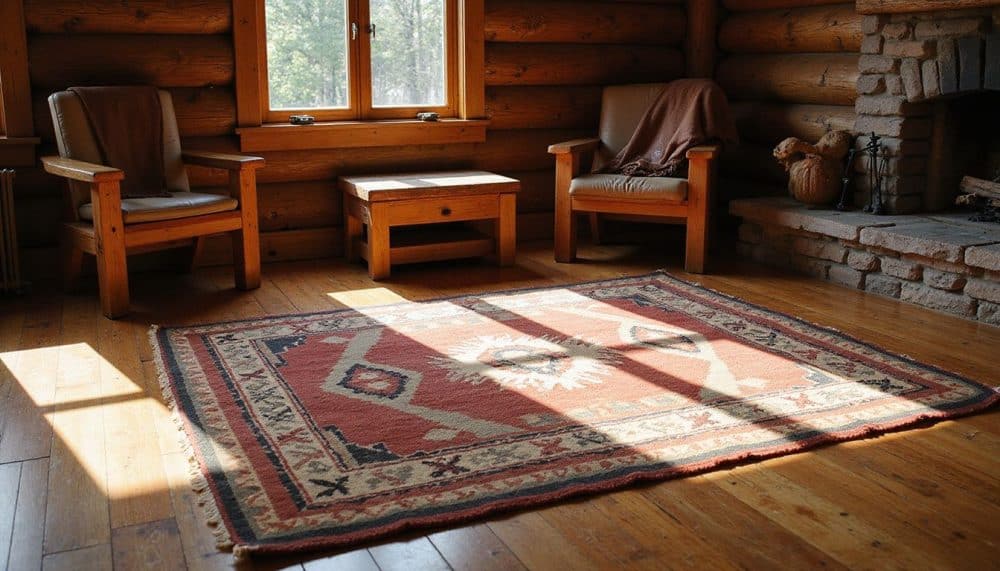
Ever walked across a rug that felt almost alive under your feet?
That’s the magic of handcrafted Western rugs made from natural fibers like wool. They stay tough and soft for decades, not just months.
I’m going to show you exactly how these eco-friendly rugs bring lasting value to your home. You’ll discover why they help protect our planet by reducing waste and carbon emissions. And you’ll see how buying one supports both cultural traditions and real people making a living from their craft.
Ready to find a rug that actually lasts?
Durability of Handcrafted Western Rugs
Handcrafted Western rugs stand up to real life. Think spills, muddy boots, pets racing across the floor, and kids dropping snacks everywhere.
Thanks to natural fibers and centuries-old techniques used when producing Western area rugs, these durable rugs can last for generations. You’ll often spot a 100-year-old Navajo rug that still looks stunning.
Heirloom Quality Assurance
People hunt for antique rugs like this because they’re built to last.
A well-maintained wool rug can last 50 years or more, according to industry research. Some families have passed down these handmade wool rugs for over a century.
Their hand-spun wool keeps bright colors and strong threads much longer than synthetic alternatives. Machine-made rugs often end up in the trash after just 5 to 10 years.
Many vintage Persian rugs become more valuable as they age. Their unique artistry never goes out of style, making them the ultimate slow fashion for your floors.
You get long-term value and a piece of cultural heritage. Each purchase supports sustainable practices while keeping waste out of landfills.
A genuine family heirloom isn’t just about beauty. It also carries stories from one generation to the next (and maybe a few cookie crumbs from grandma’s kitchen).
Reliance on Durable Natural Materials
Handcrafted Western rugs use only strong, lasting natural materials. Wool, cotton, and jute form the core of these pieces.
Wool comes right from sheep fleece, which grows back each year without harming the animals. This makes it a truly renewable resource.
New wool is soft but incredibly tough. It handles rough use in busy areas like hallways or living rooms with ease. Research shows wool fibers can stretch more than 35% and still bounce back to their original shape.
Wool also has lanolin, a waxy layer that naturally pushes away water and stains. Muddy feet or a spilled drink won’t ruin your rug’s look anytime soon.
Hand-spun yarn makes these rugs thick and springy underfoot. They bounce back after someone walks over them again and again.
Natural fibers feel warm in winter and cool in summer thanks to their breathability.
These materials break down naturally at the end of their lives. Wool biodegrades in 6 to 12 months, releasing valuable nutrients back into the soil. Cotton takes just 1 to 5 months to decompose completely.
Compare that to synthetic rugs made from plastic fibers. Those can sit in landfills for centuries. According to the EPA, about 4 billion pounds of carpet waste ends up in U.S. landfills every year, and synthetic materials can take 30 to 40 years just to start breaking down.
Cotton keeps the weave tight while jute adds strength for everyday family life. If you’ve seen an old Navajo rug passed through generations, you know exactly what I mean.
This attention to real materials supports sustainable design. It’s the kind that never goes out of style because nature simply works right every time.
Preserving Traditional Craftsmanship
Old-world skill lives on in every handmade rug. Weavers use techniques passed down for many generations.
Turkish rugs show this beautifully. They’re rooted in centuries-old Anatolian tradition, dating back to the 15th century. These pieces feature tight knots and strong natural materials like hand-spun wool or cotton.
Each line or color has meaning. Designs often come from tribal cultures, such as Native American tribes making bold Navajo rugs, or artisans creating flatwoven Kilims.
Pattern styles range from geometric to floral. Each design shows real artistry and deep respect for cultural heritage.
Persian rugs offer another example. They’re made using methods that haven’t changed much since the 15th century, like those seen in Oushak rugs from western Anatolia.
This kind of traditional craftsmanship gives these durable rugs lasting value. They stand far above most synthetic alternatives you see at chain stores today.
Honestly, who wants a rug that looks just like everyone else’s?
Hand-knotted techniques ensure every piece stands up to wear while telling its own story in your décor. It’s a genuine element of sustainable luxury living with eco-friendly practices as a priority.
Eco-Friendly Features of Handcrafted Western Rugs
Handcrafted Western rugs use natural materials and eco-friendly practices that help lower your carbon footprint.
These rugs often support renewable resources, natural dyes, and biodegradable materials. That makes them a smart pick for anyone thinking about environmental responsibility.
And hey, they look great in any living room, too.
Choosing Natural and Renewable Resources
Wool and cotton make these eco-friendly rugs stand out from synthetic alternatives. Sheep give wool every year, so there’s no worry about running out.
Jute comes from a fast-growing plant. It reaches maturity in under 18 months, making it one of the most rapidly renewable textile fibers available.
These renewable materials create durable rugs that feel soft under your feet. Sheep often live in small herds near local weaving villages, which keeps supply chains short and helps rural economies thrive.
This is a win for everyone involved.
Natural fibers break down at the end of their life instead of filling up landfills with synthetic waste or microplastics. No more tiny plastic bits hiding in your carpet.
According to a recent study, around 33% of airborne particles in buildings are microplastics from synthetic fibers like those used in carpets and rugs. By choosing natural materials, you’re keeping those particles out of your home and lungs.
Since these materials skip pesticides and harsh chemicals, they offer a much healthier choice. This is especially important if you have allergies, pets, or kids crawling around the house.
Practices in Eco-Friendly Dyeing
Eco-friendly dyeing of handmade rugs often uses vegetable-based colorants. These come from plants, minerals, or even insects.
Natural dyes keep the process clean and safe for the environment. No nasty runoff in rivers or headaches from harsh chemicals here.
Minimal processing means less water and energy are used with each batch. Traditional textile dyeing can use up to 200 liters of water to dye just 1 kilogram of fabric. Natural dyes cut that dramatically.
Waterless dyeing technology can reduce water usage by 70 to 100% in the dyeing stage.
Fewer toxins leak out during production because the process avoids heavy metals and poisons found in synthetic options. According to UN Environment Programme data, dyeing and finishing contribute to 36% of the climate impact in the textile supply chain.
Colors made from plant sources tend to last longer as well. Your rug stays bright through years of foot traffic (and maybe a few spilled juice boxes).
Since there are fewer strange fumes coming off these eco-friendly rugs, your air stays fresh, too. That’s a big win for anyone who wants sustainable interiors without harming local ecosystems.
Traditional methods also support biodiversity by using native materials. This beats chemical-heavy synthetic alternatives that damage habitats and waterways down the line.
Methods to Minimize Energy Consumption
Handcrafted Western rugs rely on skilled hands, not machines. This manual process barely needs electricity, so the carbon footprint stays low.
Nearly all of the energy used comes from human labor instead of power-hungry equipment or electric looms.
Small workshops often use local sheep and natural fibers like wool. This means fewer trucks or ships hauling materials long distances.
Less travel cuts down greenhouse gas emissions at every stage. A typical rug has a carbon footprint of 10 to 50 kg CO2e, with natural fiber rugs at the lower end, around 10 kg CO2e. Compare that to synthetic rugs, which can emit up to 50 kg CO2e.
Flat weaving and hand-knotting are traditional techniques that don’t need big machines or fancy factories. Just simple tools and lots of patience.
Wool itself is a great pick because it takes less energy to process compared to synthetic materials made in chemical plants. Research shows that production processes for plant-based and animal-based fibers consume 40% less energy than synthetic manufacturing.
These practices support sustainable luxury by maintaining energy-efficient methods. Each rug created reduces environmental impact while keeping the craft alive.
Pretty neat for something you put under your feet.
Promotion of Biodegradability and Waste Reduction
Wool, cotton, and jute rugs break down naturally at the end of their use. No microplastic pollution here, unlike those old synthetic rugs cluttering up basements and landfills.
These biodegradable materials just go back to the earth instead of lingering for hundreds of years. I love that my eco-friendly rug can someday return to nature without causing harm.
Durability means you replace these types of handmade rugs far less often. This reduces waste in our homes.
Think about it. One long-lasting rug might eliminate decades’ worth of trips to the landfill compared to machine-made or synthetic alternatives.
According to the EPA, over 4 billion pounds of carpet waste end up in U.S. landfills every year. That’s about 3.5% of all landfill waste in the entire country. Most of it is synthetic and takes 30 to 200 years to break down.
Natural dyes and fibers also mean no leftover toxins. Everything harmlessly dissolves over time.
Each purchase supports a circular economy. With fair trade values included, investing in sustainable design becomes more appealing every day.
Not that I need an excuse for another antique rug.
Promotion of Ethical and Cultural Practices
Handcrafted Western rugs often help local economies grow and support fair business deals for weavers. This gives back to the artisans who beautify your floors.
Choosing these eco-friendly rugs means you get a piece rich with cultural heritage. Not just another mass-produced mat from a large supplier.
Preserving Heritage Craftsmanship
Artisans keep traditional techniques alive by teaching hand-knotting and flat-weaving skills through generations. You’ll see these old ways clearly in Oushak rugs, which follow a western Anatolia tradition from the 15th century.
Rugs like these serve as true cultural artifacts. Each one tells its own story with distinct motifs and regional patterns.
These designs often appear in modern interiors too, where heritage meets sustainable design. Natural fibers such as hand-spun wool or cotton are common materials for handmade rugs.
They add natural durability while also supporting ethical consumerism and environmental responsibility.
Antique Persian rugs made using vegetable dyes or natural pigments show how choosing non-toxic dyes can help prevent water pollution. Traditional textile dye effluents can contaminate water sources with harmful chemicals and heavy metals.
Supporting local artisans keeps rare crafting skills from fading away. It helps communities grow stronger at the same time.
Each rug really is one-of-a-kind. Kind of like having a piece of history right under your feet.
Empowering Local Artisans and Communities
Handmade rug production helps families build better lives. Local weaving lets more income stay with the artisans instead of leaving for large factories or distant suppliers.
Artisans in underprivileged places find steady work, even when the market shifts. Fair trade gives them stable wages, so families can plan ahead and children don’t have to leave school early to earn money.
Take the example of rug-weaving cooperatives in places like Morocco and Pakistan. These groups include hundreds of families from rural villages. By partnering directly with buyers, artisans can earn fair compensation without middlemen taking most of the profit.
Groups like Navab Brothers set high ethical standards for sourcing. This means makers are respected and safe at work.
This kind of eco-friendly interior design supports long-standing family trades. Old skills pass from elders to young people through training at workshops right in these rural spots.
Imagine learning rug-making from someone who has done it for thirty years.
Every thread keeps culture alive while helping local economies grow. Many artisans now see a future where cultural heritage is part of daily life again.
All because people choose natural fibers, vegetable-dyed yarns, and handmade rugs over synthetic alternatives and quick-changing fashion trends.
Upholding Fair Trade and Ethical Employment
Fair trade practices give artisans fair pay and safe workplaces. Companies like Navab Brothers check every step to make sure rug makers earn decent wages and work in healthy spaces.
No sweatshops here, thank you.
These efforts shield workers from unfair treatment, including child labor. Fair trade standards help keep family incomes steady, even if market prices jump up or down.
Clear sourcing builds trust between buyers and makers. People know their eco-friendly rugs come from responsible places.
Ethical employment means the regional rug-making trade can last for years. It supports local economies and promotes positive change back home.
Every time you pick a handmade rug made with natural fibers or biodegradable materials, you join a movement. A movement that values tradition without ignoring human rights or environmental responsibility.
Pretty cool, right?
Advantages of Sustainable Living Through Western Rugs
Handcrafted Western rugs make your home feel cozy and fresh, while helping you reduce your carbon footprint.
If you want to support cultural heritage and encourage responsible consumer behavior, these pieces offer many benefits.
Check out some real-life examples or customer stories for more inspiration.
Minimizing Environmental Footprint
Wool rugs made by hand use local sheep farms. This helps support sustainable grazing and smart land management.
These eco-friendly rugs come from renewable resources like wool and other natural fibers, instead of synthetic alternatives that harm the environment. Their production requires less energy than mass-produced or machine-made synthetic rugs.
Most artisans use simple tools, not lots of electricity or big machines.
No toxins or flame retardants appear in these handmade pieces. Your air at home stays clean and safe for kids and pets.
Pretty nice perk if you ask me.
Artisans use non-toxic dyes from plants, reducing water usage and the danger of chemical runoff into rivers. When these natural fiber rugs get old, they’re fully biodegradable.
They break down without creating microplastic pollution like most synthetic rugs do. Research shows that synthetic carpets shed microplastics that contribute to about 33% of the airborne particles in our homes.
Talk about a major win for the planet.
Because durable Western rugs last many years (sometimes handed down through generations), people throw away less stuff. This keeps more trash out of landfills.
According to recent data, over 4 billion pounds of carpet waste end up in U.S. landfills every year. Most of it is synthetic and can take up to 200 years to decompose.
Choosing an environmentally friendly lifestyle means every step you take across your living room floor matters.
Investing in Long-Term Value and Timeless Designs
Spending money on handmade Persian rugs or antique area rugs may seem steep at first. That’s big savings for something that can last over a century.
These durable rugs use hand-spun wool and natural dyes instead of synthetic fibers and toxic chemicals. That makes them hold up against daily foot traffic and keeps their colors bright for decades with just regular care.
Research confirms that well-maintained wool rugs can last 50 years or more. Some hand-knotted pieces even reach 100 years while still looking beautiful.
Timeless designs like geometric shapes or tribal patterns never really go out of style. They adapt to changing home trends each year, so your living room stays stylish without extra spending.
A good rug cuts down on the need for frequent replacements. This lowers waste management issues and reduces your carbon footprint along the way.
Investing in eco-friendly rugs helps support sustainable luxury while making your space look great, too.
If you’re looking to make a rug purchase you can feel good about, we recommend Southwestern Rugs Depot as a great, ethical place to shop for your next Western rug.
Conclusion
Handcrafted Western rugs last for generations because of their tough natural fibers, like hand-spun wool. These eco-friendly rugs use renewable materials and non-toxic dyes, reducing environmental harm and carbon emissions.
Choosing handmade over synthetic options supports local economies, traditional craftsmanship, and a sustainable lifestyle. Every rug tells a story. It warms both your home and the hearts of artisans who keep this cultural heritage alive.
If you want style with long-lasting value that’s good for nature, these durable rugs are the real deal.
FAQs
1. Why do handcrafted Western rugs last so long?
Hand-knotted wool rugs rely on the fiber’s natural elasticity to withstand decades of foot traffic, often lasting over 50 years while maintaining their shape. Unlike mass-produced synthetic options that depend on glue, which eventually fails, the structural integrity of a hand-tied knot creates a permanent bond that simply doesn’t break down.
2. Are handmade rugs really better for the environment?
Yes, because synthetic rugs are made from plastics like polypropylene that can take hundreds of years to decompose in a landfill. Choosing a biodegradable wool rug prevents you from contributing to the four billion pounds of carpet waste discarded in the U.S. every single year.
3. How do these rugs support sustainable living?
Since wool is 100% biodegradable, it breaks down in the soil in as little as 3-4 months and actually releases helpful nutrients like nitrogen back into the earth. This creates a true closed-loop cycle where your home decor eventually nourishes the planet instead of polluting it.
4. What makes natural dyes better than synthetic dyes?
Natural dyes derived from plants like indigo and madder root are completely free of the toxic heavy metals and harsh chemicals often found in commercial synthetic colors. This keeps dangerous runoff out of our water systems during production and means your home stays free from these industrial pollutants.
5. Can antique rugs and Persian rugs be part of sustainable interiors?
Purchasing an antique rug is the single most effective way to reduce your carbon footprint because it requires absolutely no new raw materials or energy to produce.
6. Do eco-friendly practices in rug making really matter?
These practices directly improve your indoor air quality since natural wool rugs lack the volatile organic compounds (VOCs) that off-gas from the glues and latex backings of factory-made carpeting. You get a cleaner home environment while supporting a craft that respects the planet.